Singapore Zoo's first-ever litter of Sri Lankan leopard cubs make their public debut
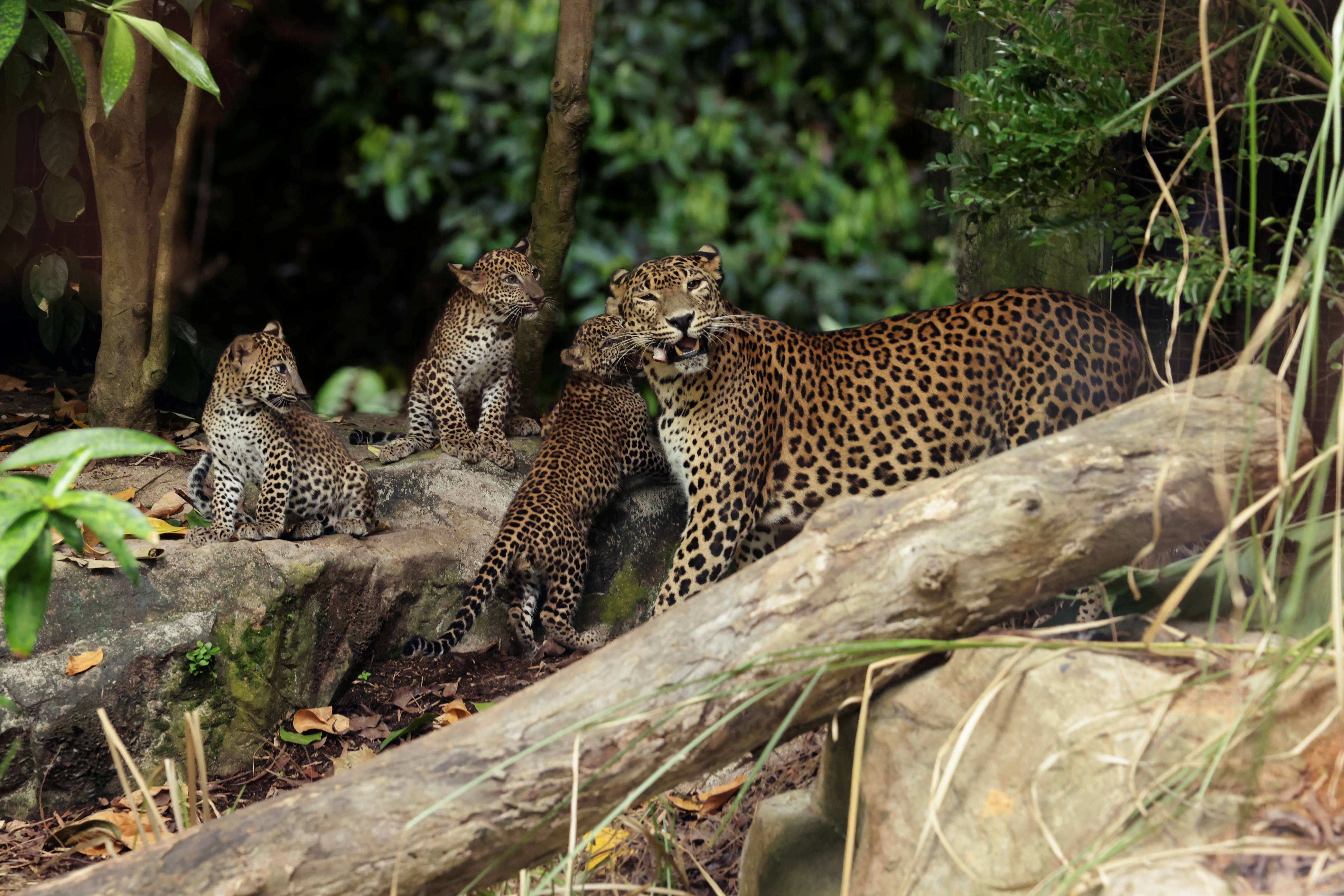
Three Sri Lankan leopard cubs have made their public debut at Singapore Zoo, and visitors can now spot the playful triplets exploring their exhibit at Wild Africa.
Born to mother Yala and father Asanka on 1 January 2026, the two males and one female are the pair’s first litter and among only around 80 Sri Lankan leopards in zoos worldwide. This marks the first birth of the species at Singapore Zoo, with the last successful birth recorded at Night Safari three decades ago.
Threatened by habitat loss, declining prey and illegal wildlife trade, Sri Lankan leopards are listed as Vulnerable on the IUCN Red List. With fewer than 800 individuals estimated to remain in the wild, efforts in managed populations play a complementary role in supporting the species’ long-term survival.
Anand Kumar, Curator, Animal Care (Operations), Mandai Wildlife Group, said, “Bringing together a compatible pair took nearly three years and close collaboration across continents. To see three healthy cubs thriving and developing their own personalities is incredibly rewarding — not just for our team but also for our colleagues from partner zoos. The two males tend to be more laid-back, while the female is feistier. We can already tell them apart by their demeanour and the spot patterns on their forehead, like fingerprints. With such a small managed population globally, milestones like this highlight the importance of these programmes. When people can come face to face with these leopards, that's how they come to care about a species they might otherwise never know.”
Yala and Asanka were paired as part of the European Association of Zoos and Aquaria (EAZA) Ex-situ Programme (EEP), an internationally coordinated breeding programme aimed at maintaining healthy and genetically diverse populations of threatened species. Yala, 8.5 years old, arrived from Banham Zoo and Aquaria in the United Kingdom in 2024, while Asanka, about five years old, was transferred from the National Zoo & Aquarium in Australia in 2025.
Their introduction was gradual and carefully planned — beginning with visual contact through a barrier, followed by access to shared spaces at different times so they could become familiar with each other’s scent. After positive behavioural responses were observed, the pair were brought together in late September, with mating occurring soon after. Pregnancy was confirmed a month later in October, with weekly ultrasound monitoring of the development through to birth. In the weeks leading up to her due date, Yala was housed in an off-exhibit den equipped with a nest box for privacy, where keepers minimised noise and activity to provide a calm environment.
As an experienced mother with two previous litters before her transfer to Singapore, she has been attentively nursing and caring for her triplets since their birth. Now over three months old and weighing around 5kg each, the cubs are growing steadily and becoming more confident. During this stage, the cubs begin to display natural behaviours critical for their development. To support this, they have transitioned to a partial meat diet — an early step for young leopards as they grow into their natural feeding habits, encouraging skills such as chewing and scent recognition. The cubs are expected to fully wean at around five months old. The trio are also often seen playfighting or curled up together — behaviours that help develop social and survival skills they will rely on as adults.
The little ones had their first veterinary check in February and were given a clean bill of health. They also received vaccinations against common feline diseases and deworming treatment as part of routine preventive care.
The triplets' names, to be announced in partnership with exhibit sponsor, Haw Par, will be revealed soon. With these new arrivals, Singapore Zoo is now home to six Sri Lankan leopards and one more individual at Night Safari. Visitors can spot them in the exhibit with mum daily until mid-May and subsequently every Wednesday, Saturday and Sunday.
Local residents with the free WildPass enjoy discounted admission to Singapore Zoo from $39.20 for adults and $27.20 for children. WildPass holders celebrating their birthday can enjoy one complimentary admission with a full-paying adult. Visit www.mandai.com for more information.
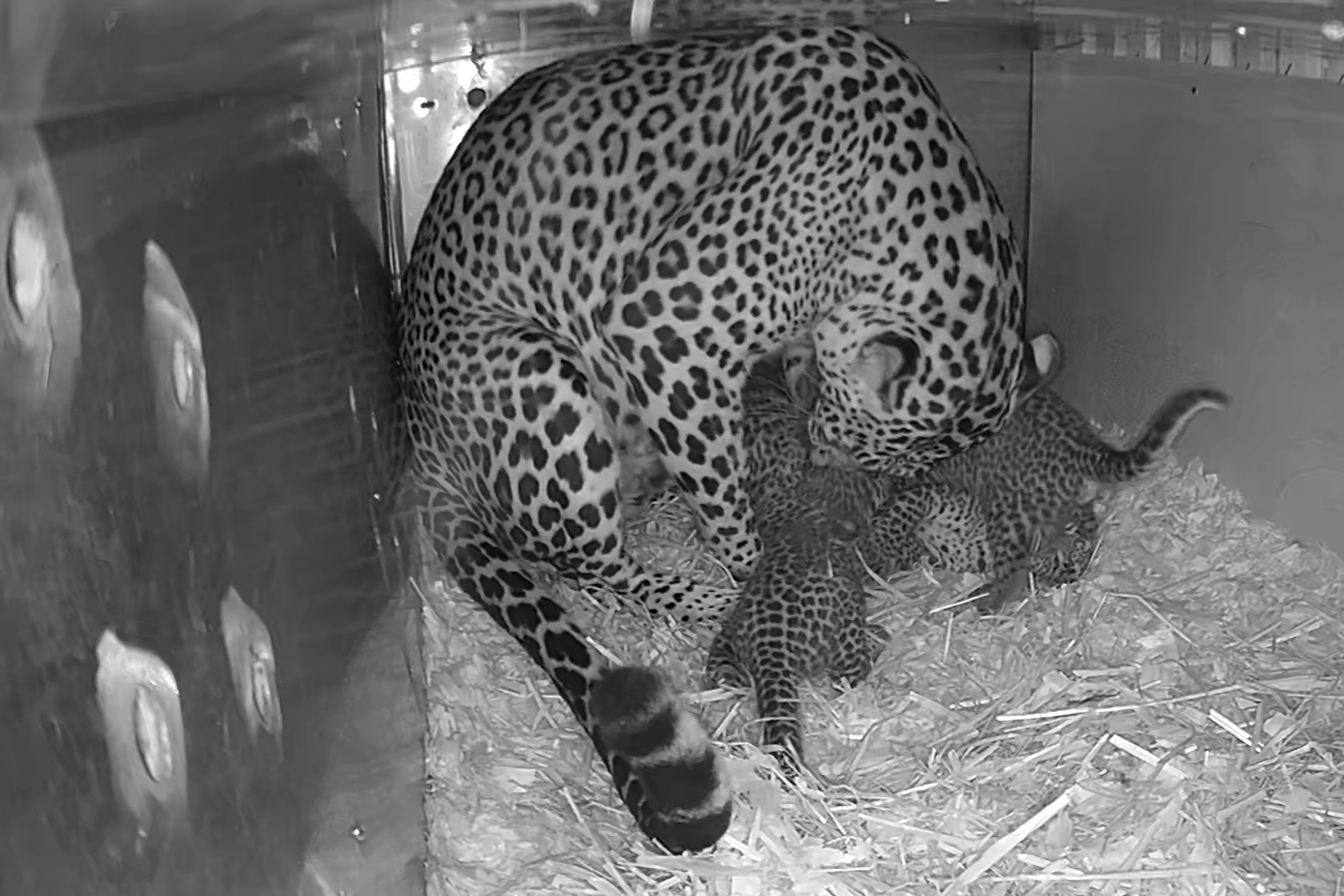
Yala with her cubs in their nest box, a month after their birth on 1 January 2026. These cubs will reach maturity in two to three years.
Photo credit: Mandai Wildlife Group
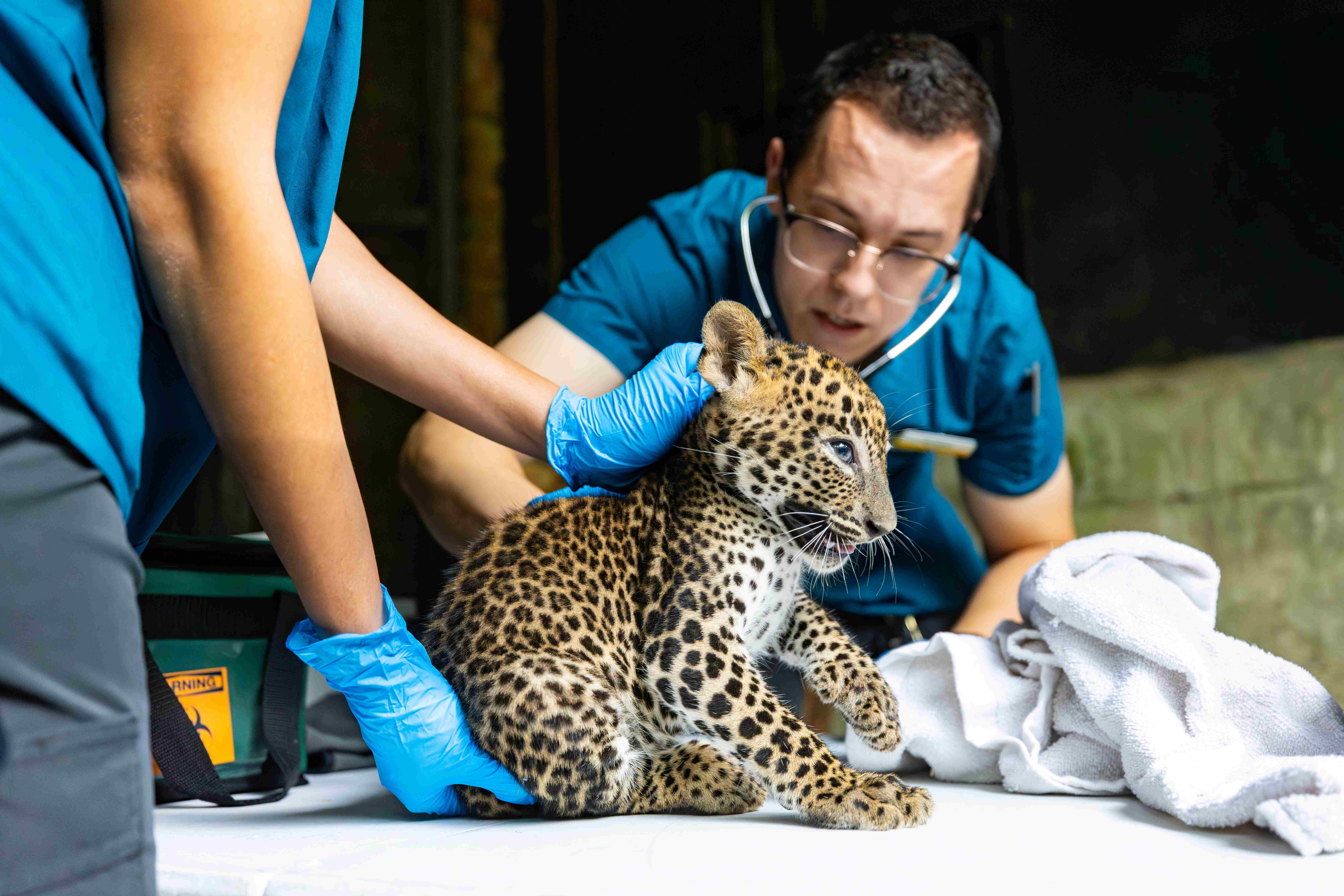
A first health check for the leopard cubs. Dr Trent Van Zanten, Veterinarian, Veterinary Healthcare and Scientific Programmes, Mandai Wildlife Group, examines one of the triplets in February, where they were sexed and microchipped.
Photo credit: Mandai Wildlife Group
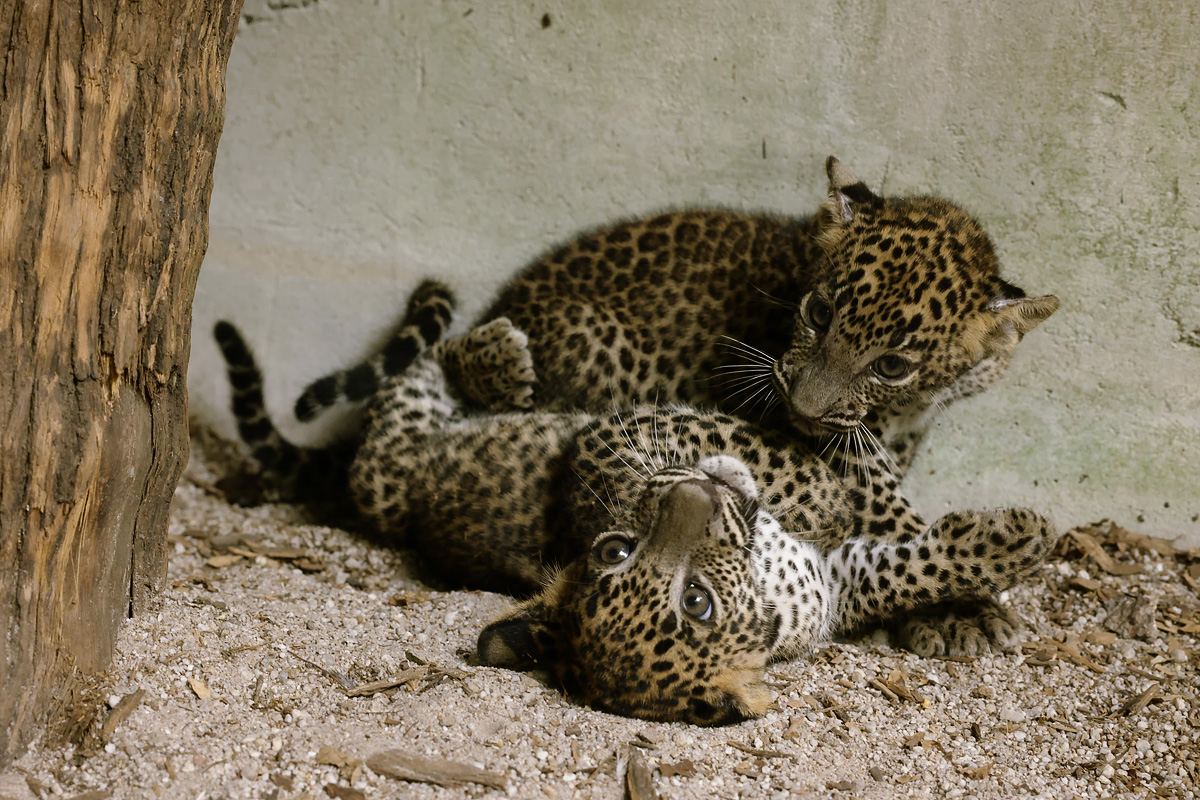
Two of the triplets playfight in the den. These scrappy bouts are an important part of early development, helping the cubs build social and survival skills.
Photo credit: Mandai Wildlife Group
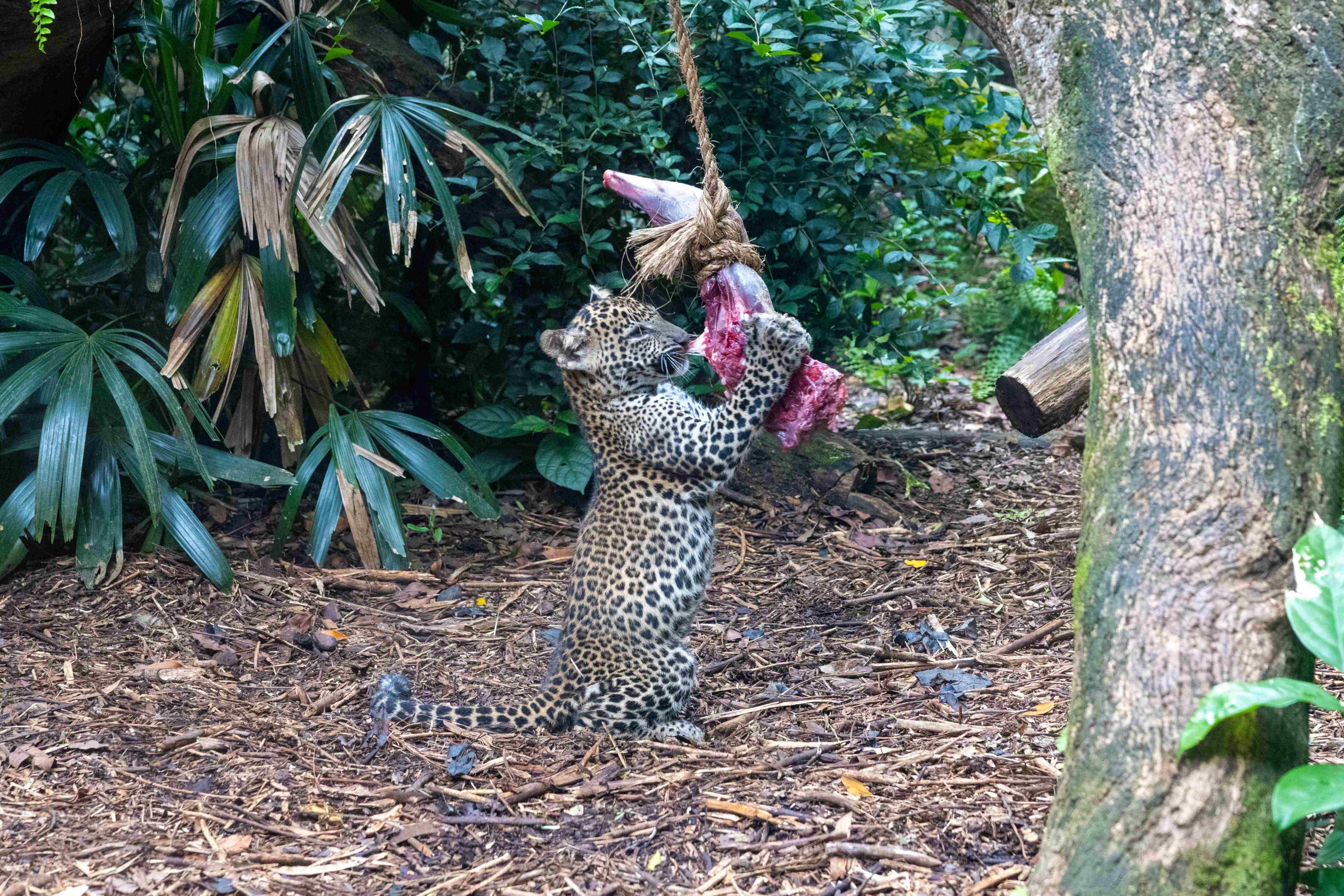
A cub investigates a piece of meat suspended from a tree — one of the several enrichment items in the exhibit designed to keep the cats mentally and physically stimulated.
Photo credit: Mandai Wildlife Group