Lifespan10 to 30 years
Quick Facts

Purple-naped Lory

Specialised Feeding
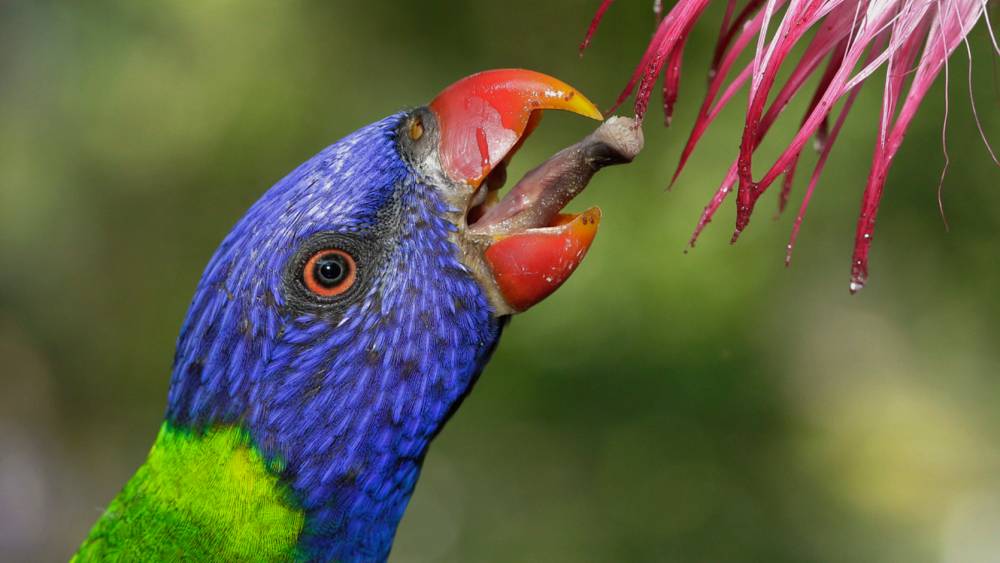
Lories and lorikeets are set for the sweet life. They are equipped with brush-tipped tongues that specialise in gathering nectar and pollen from flowers. These important tree pollinators also feast on fruits, berries, and the occasional insects.
The main difference between them lies in their tails — lories have short and blunt tails whereas lorikeets have longer, tapering tails.
Colourful Camouflage
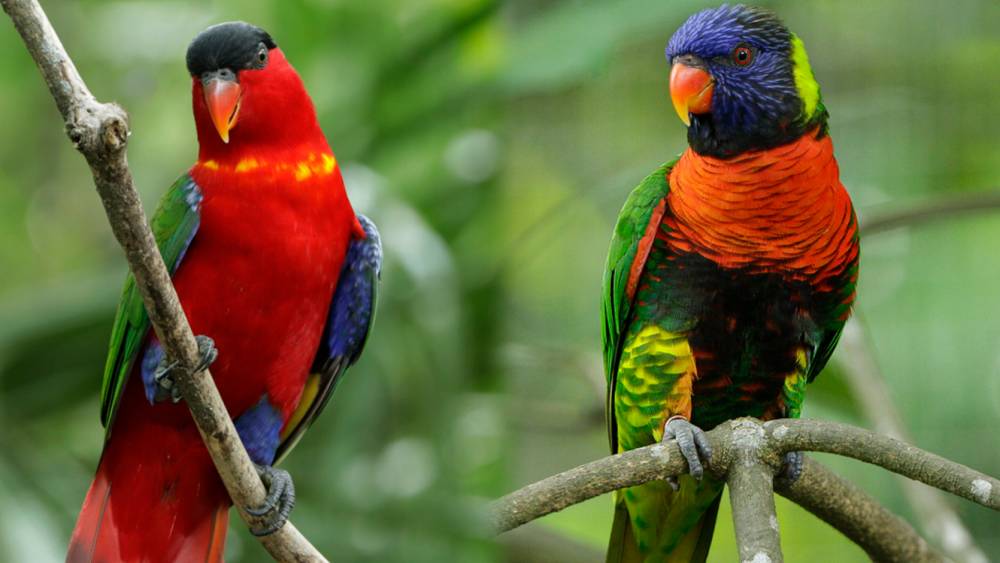
Loris and lorikeets are amongst the most colourful of parrots, dazzling with their reds, greens, blues, and yellows. Surprisingly, colours can be camouflaging.
The vibrant plumage helps the birds blend into the multi-coloured blooms they feed on. Known for their agility, these parrots love climbing and often hang upside-down while feeding or playing.
Endangered Endemic
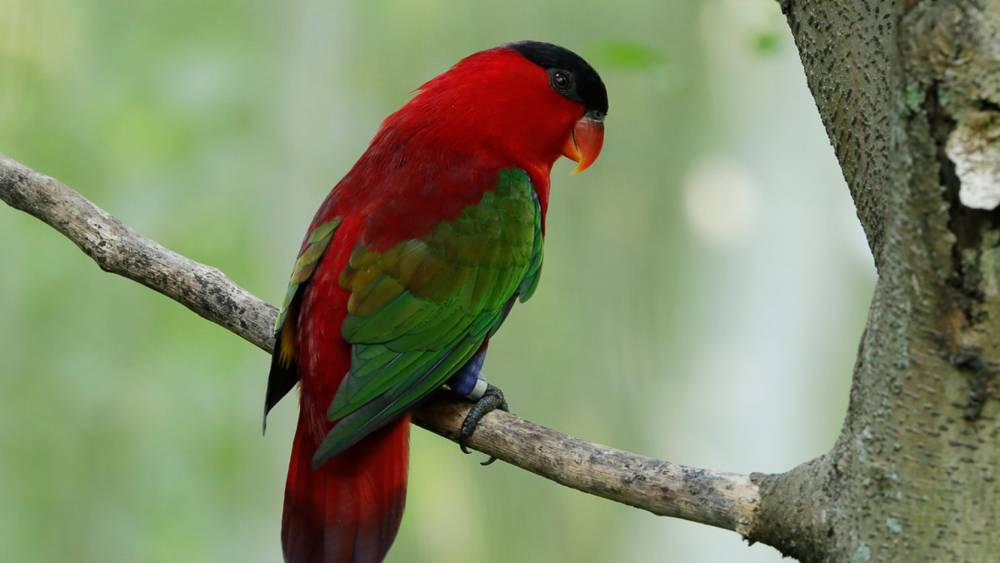
Endemic to the island of Seram in the vast Indonesian archipelago, the purple-naped lory is the only red parrot in its forests with green wings.
There are only between 500 and 5,000 mature individuals remain in the wild, the consequence of intense trapping for the pet trade as well as the selective logging of mature trees bearing cavities required for nesting.
Squeaky Sounds
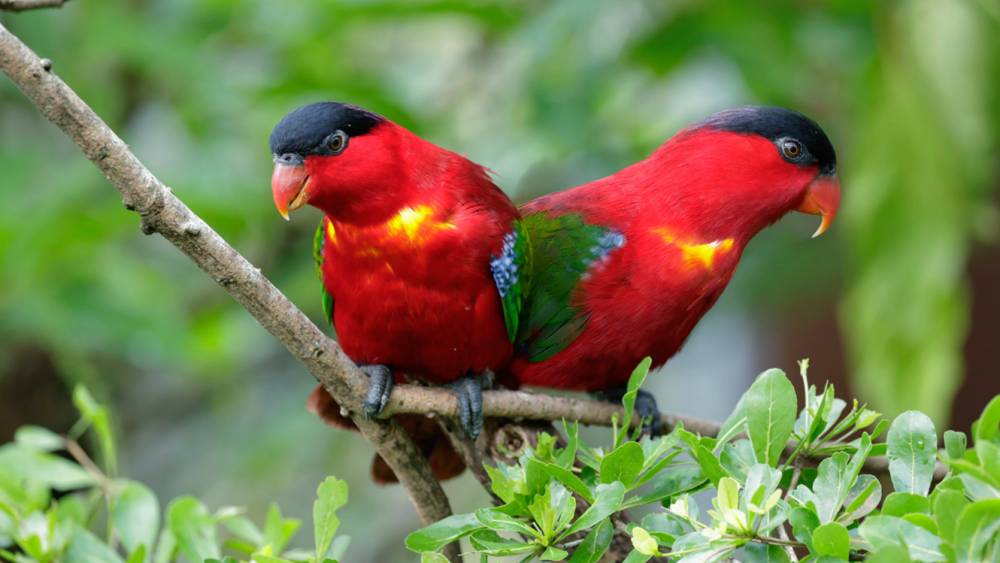
Living in flocks of twos and threes, most of the lory’s sedentary population is concentrated in Manusela National Park.
It prefers the cool climes of hill forests, dwelling between 400 m to over 1,000 m above sea level, with densities highest in the upper parts.
The lory announces its presence with squeaky sounds as well as distinctive whistles and screeches like a bird of prey.