Night Safari welcomes its first Sunda Pangolin pup in a decade, with a second on the way
A critically endangered Sunda pangolin has been born at Night Safari for the first time in ten years, marking an important milestone for a species that remains difficult to breed in human care.
The pup was born on 1 March 2026 to first-time parents Gumby, the mother, and Radin, the father. Its arrival comes as another female, Bawang, is also pregnant and expected to give birth in the coming months. The births provide valuable opportunities to increase understanding of this elusive native species and strengthen managed populations.
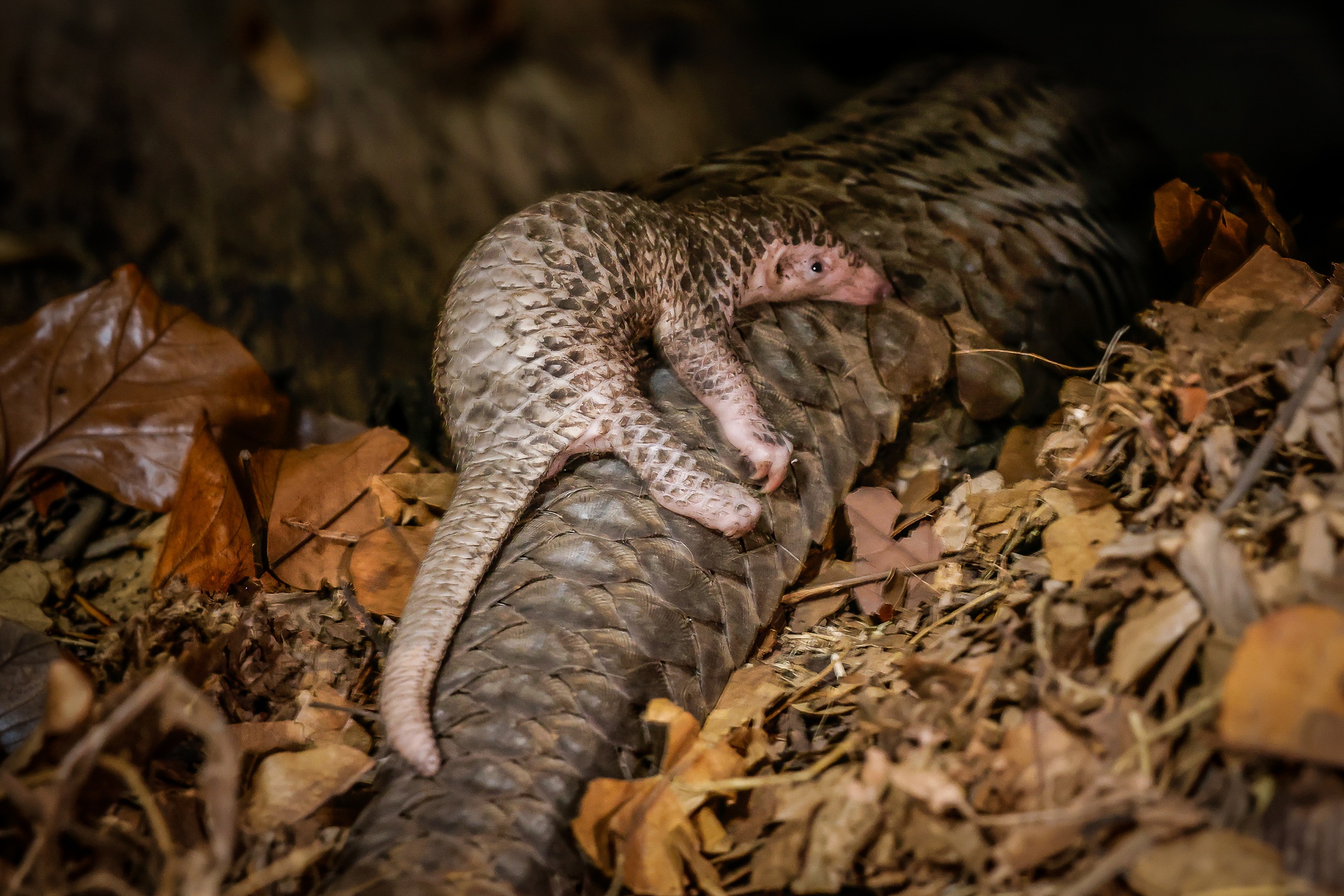
The newborn pup with mom Gumby, one of four Sunda pangolins at Night Safari, at 17 days old. Young pangolins, also referred to as pangopups, often ride on their mothers’ tails to stay close as they move around.
Photo credit: Mandai Wildlife Group
While Gumby’s pup marks a hopeful moment, Sunda pangolins continue to face serious threats in the wild. Globally, they are the most heavily trafficked mammals, with over a million individuals taken from the wild in the last decade. In Singapore, these nocturnal scaly mammals move between forest patches, crossing urban landscapes where they are at risk of vehicle collisions.
The weeks following the birth have been encouraging, with both Gumby and her pup in good health. During this time, keepers stayed overnight to keep a close watch and ensure both the new mother and her newborn were safe and thriving. To minimise disturbance, they are monitoring Gumby and her pup via CCTV. The young animal has been observed clinging securely to Gumby’s tail — a natural behaviour for juvenile pangolins. At nearly three weeks old, the pup is currently about the size of a large avocado and covered in soft, pale scales that will gradually harden with age.
Dr Cheng Wen-Haur, Deputy CEO and Chief Life Sciences Officer, Mandai Wildlife Group, said, “Watching Gumby welcome her pup has been a heartwarming milestone for everyone involved in this journey. Gumby has taken to motherhood naturally, caring attentively for her pup, which feeds regularly and stays close at all times. The Sunda pangolin is a flagship conservation species for us, and these pregnancies are more than just rare milestones. They provide vital insights into a species that’s little understood globally, advancing knowledge across areas such as health, behaviour and reproduction, while supporting conservation efforts for pangolins both in the wild and in human care.”
Gumby and Radin were paired in August last year as part of a conservation breeding programme for the species at Night Safari, aimed at maintaining genetic diversity and ensuring the species’ long-term survival. Gumby’s pregnancy was confirmed in October 2025, kicking off months of careful monitoring and preparation to give her first pregnancy the best possible chance of success. The animal care and veterinary teams closely monitored her health with fortnightly health checks, including ultrasonography. Keepers adjusted her diet to ensure she received the necessary nutrients and enhanced her den with deeper sand and leaf litter to encourage nesting. Logs within the habitat were modified to reduce climbing risks, creating a safe environment for Gumby. The same monitoring and care are now being provided for Bawang as her pregnancy progresses.
Native to Singapore and listed as globally threatened with extremely high risk of extinction in the wild, the Sunda pangolin has been identified as a priority conservation species by Mandai Wildlife Group and its conservation arm, Mandai Nature. Conservation efforts are guided by Singapore’s National Conservation and Action Plan for the Sunda Pangolin, which adopts a One Plan Approach — a coordinated strategy that integrates actions both in the wild and in human care to strengthen the overall impact on the species’ protection. Key focus areas include healthcare, rehabilitation of injured and displaced wild individuals, ex situ conservation breeding programmes, raising public awareness and engaging community actions. As part of these coordinated efforts, rescued pangolins like Gumby and Bawang are strategically integrated into the managed population to support conservation breeding.
On average, the animal hospital at the Mandai Wildlife Reserve receives about 40 rescued pangolins a year from across Singapore. The veterinary team provide comprehensive care, including treatment and rehabilitation for the animals. About 89 per cent of rescued pangolins that arrive alive are successfully rehabilitated and released back into the wild. In addition, post-mortem examinations are conducted on deceased pangolins to understand the cause of death and enhance insights into population health. Tissue and live cells are also cryopreserved as part of biobanking efforts for future genetic and reproductive research, providing a safety net for conservation. Alongside Night Safari’s managed population, these efforts generate research and expertise that inform broader conservation strategies for the species.
Night Safari was the first zoo in the world to exhibit the critically endangered species in 2009 and the first to successfully breed them under human care in 2011. Preparations are underway for the pup to make its public debut in April 2026. Meanwhile, visitors can catch a live CCTV feed of Gumby and her pup at Pangolin Trail, a walking trail spotlighting native and Southeast Asian wildlife in Night Safari.
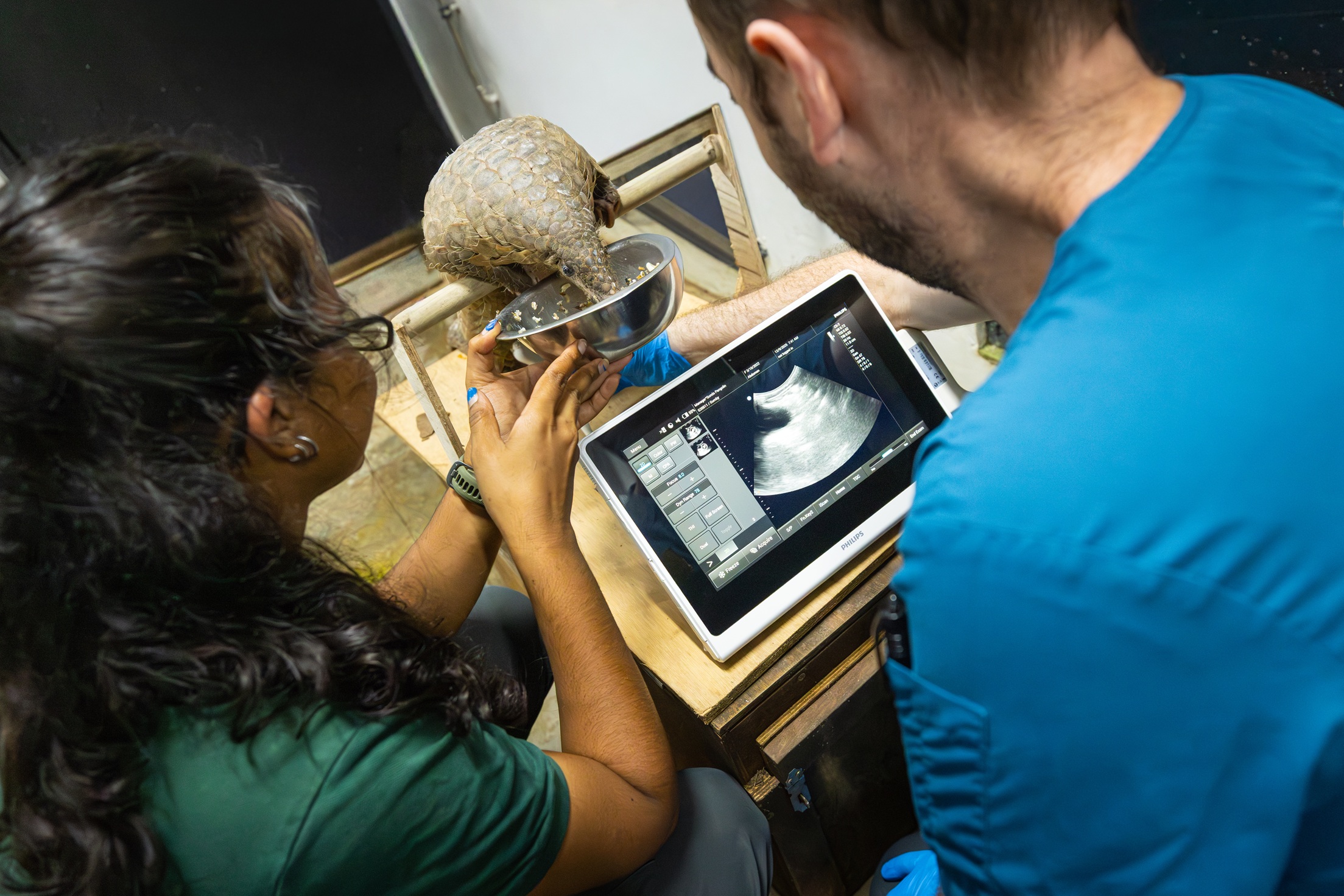
Dr Guillaume Douay, Acting Assistant Vice President of Veterinary Healthcare and Scientific Programmes at Mandai Wildlife Group, conducts a routine ultrasound on Gumby, with assistance from Amanda Grace, Keeper, Animal Care (Operations), Mandai Wildlife Group.
Photo credit: Mandai Wildlife Group
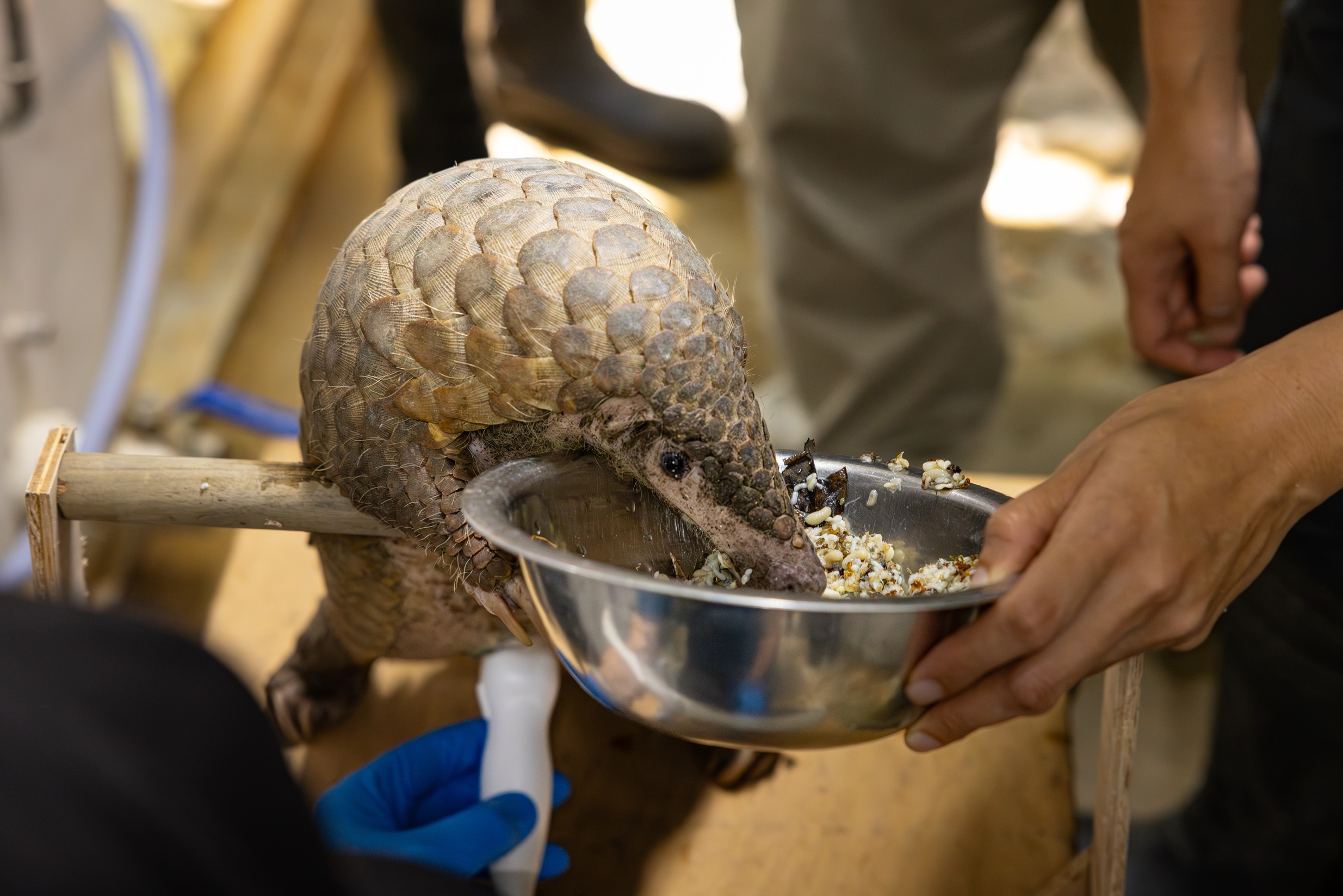
Keepers used food rewards to condition the pangolins for medical checks, encouraging them to rest their forepaws on a bar and voluntarily present their abdomens for the ultrasound procedures. The gestational period for Sunda pangolins is approximately six months.
Photo credit: Mandai Wildlife Group
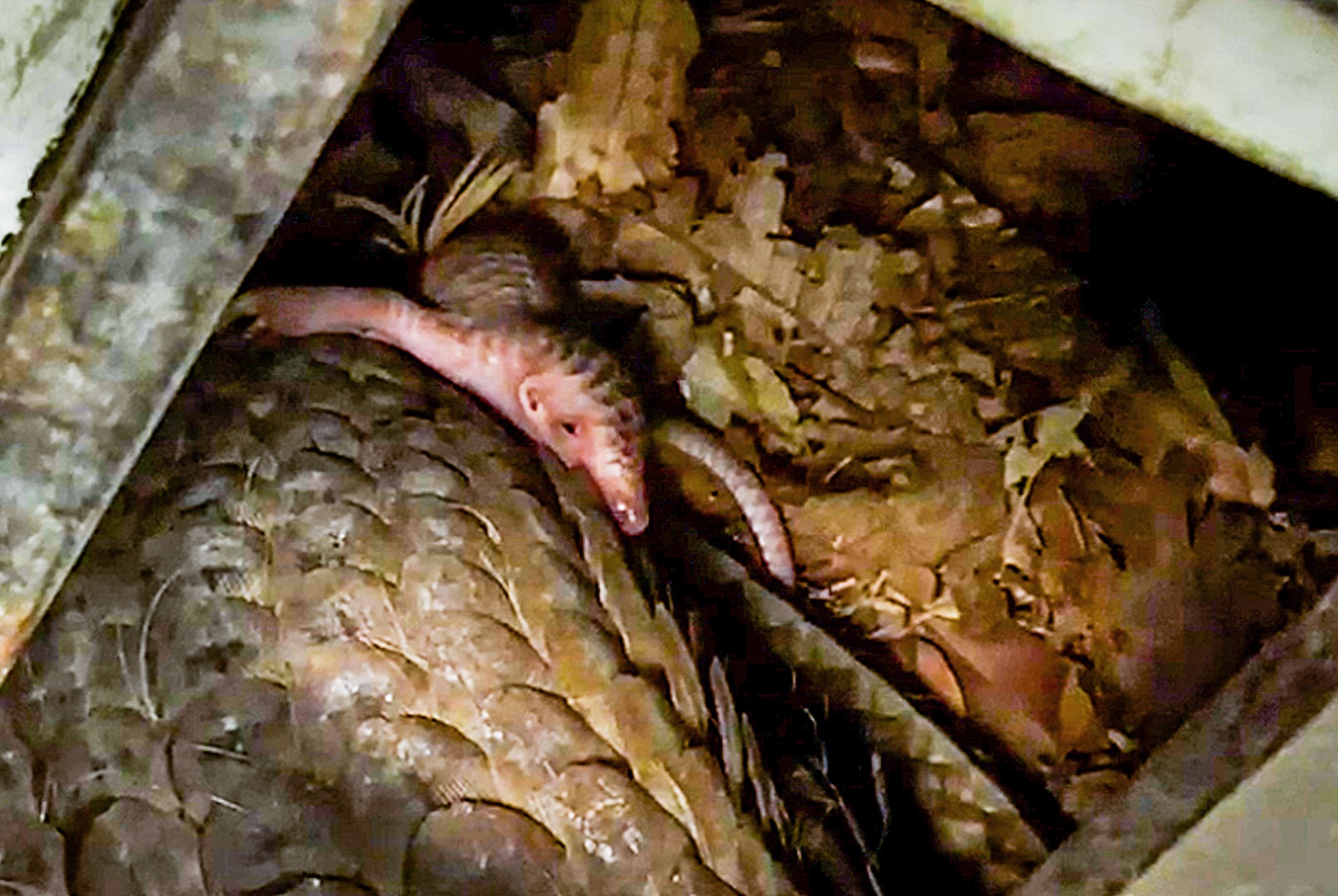
The newborn pup hitches a ride on mom Gumby’stail shortly after its birth.
Photo credit: Mandai Wildlife Group
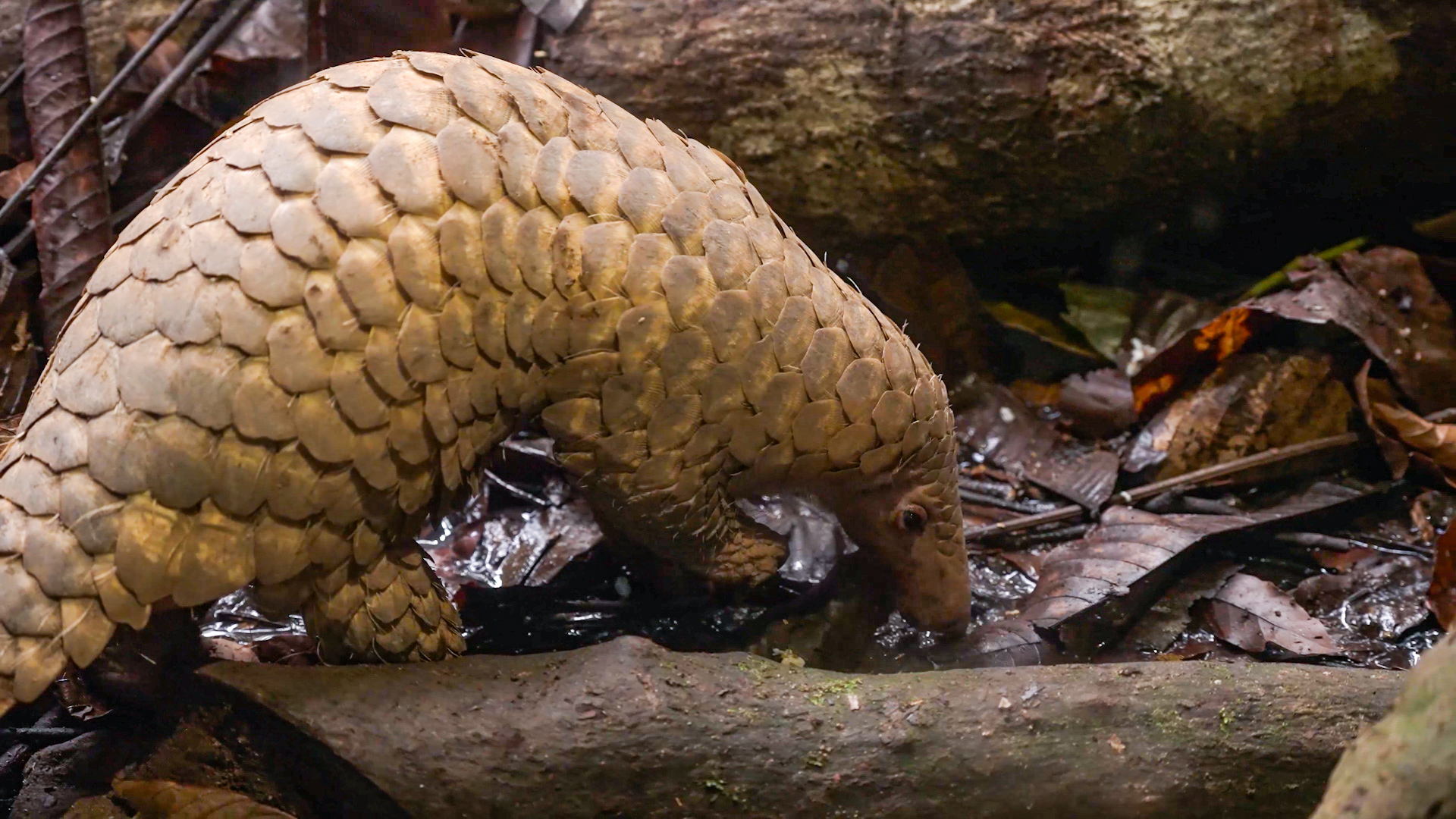
Visitors to Night Safari can spot dad Radin at Pangolin Trail, while Gumby stays behind-the-scenes caring for her growing pup.
Photo credit: Mandai Wildlife Group